
Using maths to plan roads for wildlife
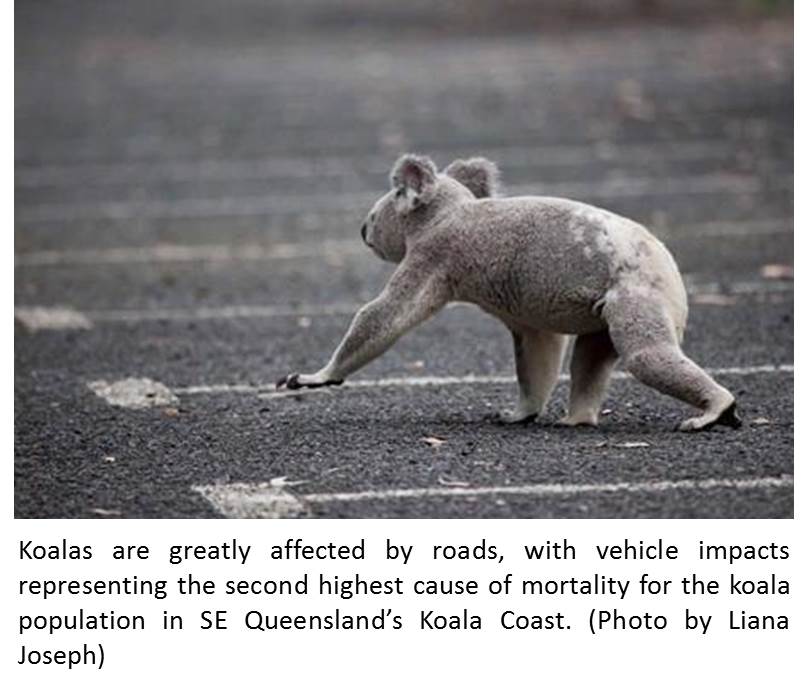 Saving koalas from cars
We all have to negotiate roads in our daily lives; we cross roads to get to the shops, our kids cross roads as they walk or ride to school, and most of us have a road outside where we live. Although they are part of everyday life they pose significant risks to our safety. Vast amounts of money are invested every year making roads as safe as possible through the considered placement of busy roads and the installation of safety infrastructure, such as barriers and pedestrian crossings. The issue is exactly the same for our wildlife moving around the landscape. Yet we currently lack comprehensive plans to make our road networks as safe as possible for wildlife. CEED researchers are addressing this gap using the power of maths to develop new planning tools for environmentally-sensitive road planning.
Read more: Using maths to plan roads for wildlife
 Species are often hard to detect in ecological surveys. They might hide from searchers – think of a frog hidden high in a tree. Or seeds of a plant might be present, yet the adult plants themselves might be absent until the seeds germinate. Or for migratory species, individuals might only be present at a site for a short period. How can we be sure that a species is truly, and permanently, absent?


