Prof Erik Meijaard
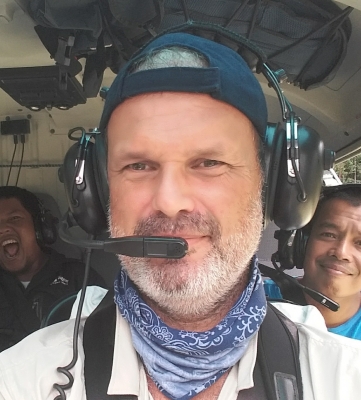
Listing Details
Adjunct Professor Erik Meijaard has worked with CEED since 2009, primarily focusing on conservation science and practice on the South-East Asian island of Borneo, where he has worked since 1994. He is currently developing a professorship by special appointment on Innovation in Asian Wildlife Management at Wageningen University in the Netherlands.
Erik holds a degree in Tropical Ecology from Wageningen University and Doctor of Philosophy in Biological Anthropology from the Australian National University. His research background is in mammalian taxonomy and evolution, but his current research interest range widely from anthropology of orangutan hunting to land use optimization studies and from oil palm management to climate studies. The broader philosophy behind Erik's Borneo research is to gain solid understanding of the total environmental and socio-economic costs of deforestation and how forested and deforested landscapes are best managed for wildlife and people.
Erik is an active communicator and a frequent writer of blogs and newspaper article, as experience has shown that this provides an effective means of translating research findings into revised policy-making and land-use decisions that benefit conservation. Additionally, Erik has worked in leadership positions for environmental NGOs, such as The Nature Conservancy, and he is very active as a consultant to financial institutions such as the World Bank and Asian Development Bank, and the private sector, including palm oil companies. All this is to ensure that the results from his and other research are actively contributing to changes in policies and practices on tropical land and resource use.
Erik has written or co-authored over 200 peer-reviewed publications and some 120 newspaper articles. Some favourites include:
Most recent book: Meijaard, E., et al. 2018. Oil Palm and Biodiversity – A Situation Analysis. IUCN Oil Palm Task Force.
Most cited book: Meijaard, E., et al. 2005. Life after logging: reconciling wildlife conservation and production forestry in Indonesian Borneo. 65,000 downloads. Cited 293 times
Most influential book: Rijksen, H. D. and Meijaard, E. 1999. Our Vanishing Relative. The status of wild orang–utans at the close of the twentieth century. Cited 288 times.
Most cited paper: Sayer et al. 2013. Ten principles for a landscape approach to reconciling agriculture, conservation, and other competing land uses. PNAS. Cited 510 times.
Most cited, single author, and aha moment: Meijaard, E. 2003. Mammals of south‐east Asian islands and their Late Pleistocene environments. Cited 160 times
Most fun: Meijaard, E., and D. Sheil. 2011. A modest proposal for wealthy countries to reforest their land for the common good. Cited 25 times.
Most influential newspaper article: Meijaard, E. 24 October 2015. Indonesia's Fire Crisis — The Biggest Environmental Crime of the 21st Century.